
Last updated September 10, 2026
Full 25-point door and opener safety check with every visit - springs, cables, rollers, tracks, and your LiftMaster or Chamberlain opener included
You get a price before we start. It does not change when the truck arrives.


 Before
 After
After Before
 After
After Before
 After
AfterThe Complete Guide to Garage Door in Pearland
Pearland sits on some of the most expansive clay soil in Brazoria County. That Beaumont clay swells when it rains and shrinks when it doesn’t, and the same ground that can shift your foundation a quarter-inch in a dry summer will rack your garage door frame just enough that no amount of spring adjustment fixes the real problem. This guide is built from two decades of working on doors in Pearland, from Shadow Creek to Silverlake to the older neighborhoods off Broadway. You’ll learn what actually breaks, what it costs, what holds up in Gulf Coast humidity, and when to call someone who will give you a straight answer. For more guides & resources, explore our full blog.
Quick Answer
Garage door problems in Pearland fall into three buckets: spring failures, frame racking from clay soil movement, and opener strain from humidity and heat. Most repairs cost $150 to $400 when caught early, and a live person should answer your call and quote the job before you ever open the garage. See our Garage Door Cost Breakdown: The Pearland Homeowner’s Reference for 2026 for full pricing details. The fastest way to avoid a $1,200 replacement is catching a $6 roller or a misaligned track before it stresses the springs.
Table of Contents
- Why Pearland’s Clay Soil Changes Everything About Your Garage Door
- Door Materials That Actually Survive Gulf Coast Humidity and Salt Air
- Navigating HOA Rules in Shadow Creek, Silverlake, and Southdown
- The Builder-Grade Door Problem: What New Pearland Homes Come With
- Real Cost-to-Lifespan Math for Pearland Garage Doors
- Seven Signs Your Door Needs Attention Before It Fails Completely
- Common Mistakes to Avoid
- When to Call a Professional
- Frequently Asked Questions
Why Pearland’s Clay Soil Changes Everything About Your Garage Door
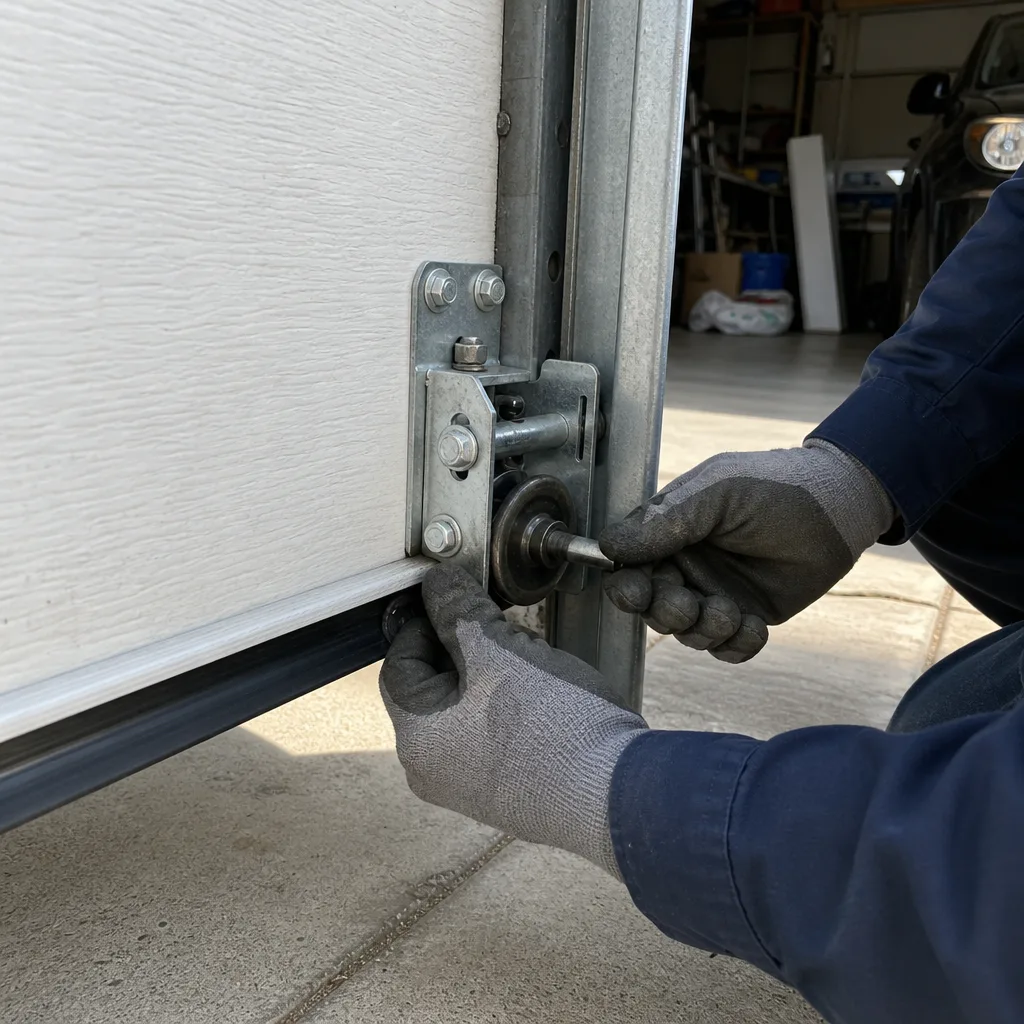
A garage door is a 200-pound panel riding on two springs and a set of tracks bolted to the frame of your house. When the ground under the slab moves, the frame moves. When the frame moves, the tracks twist. When the tracks twist, the door binds. And a binding door will eat springs, rollers, cables, and openers like a dog with a bone.
In Pearland, we see this pattern constantly. The soil here is classified as expansive clay, which means it can change volume by up to 10% between wet and dry seasons. Your slab doesn’t crack all at once. It tilts. A quarter-inch of movement at the foundation can translate to a half-inch of misalignment at the top of the garage opening. The door starts rubbing on the right side. The opener starts working harder. A year later, a torsion spring snaps at two in the morning, and you think you just had bad luck with springs. You had a frame problem that presented as a spring problem.
Here’s how to tell the difference before you pay for the wrong fix:
- Check the gap. Stand inside the garage with the door closed. Look at the gap between the door and the frame on each side. If it’s tight at the top on one side and tight at the bottom on the other, the frame has racked.
- Watch the door as it opens. A door with a broken spring barely moves or moves lopsided. A door on a racked frame moves smoothly but scrapes, groans, or shudders at specific points in its travel.
- Count the spring’s age. Most torsion springs are rated for 10,000 cycles. In a Pearland garage where the door goes up four times a day, that’s about seven years. If your springs are three years old and the door is binding, the springs are victims, not villains.
We’ve fixed doors in Southdown where the slab had dropped so far on one corner that the only honest fix was to shim the track mounts and reset the door. No spring replacement would have held. That’s the difference between treating the symptom and treating the cause, and it’s why a door company that just sells you springs over the phone isn’t doing you any favors. Otto Reinhardt has walked the soil in this county since 2004. He knows the difference.
Door Materials That Actually Survive Gulf Coast Humidity and Salt Air
Pearland’s climate is brutal on garage doors. It’s not just the rain. It’s the humidity that sits at 80% for weeks, the salt in the air that blows in from Galveston Bay, and the heat that bakes the west-facing side of your house every afternoon. Showroom doors look great in a catalog photographed in Ohio. Eighteen months on a Pearland west-facing garage, and some of them are rusting at the seams.
Here’s the honest breakdown of what works here and what doesn’t:
Steel doors: the workhorse, with a catch
Steel is the most common garage door material in Pearland for a reason. It’s strong, it insulates well, and it’s cheaper than wood. But not all steel is the same. The critical number is the gauge: lower is thicker. A 24-gauge steel door from a big-box store will dent when a kid throws a basketball at it. A 26-gauge door will dent when you look at it wrong. For Pearland homes, you want a minimum of 24-gauge steel, preferably 25 or better. You also want a galvanized core and a baked-on finish, not a vinyl wrap. The wrap peels in our humidity, and then the steel rusts. Clopay and Amarr both make galvanized steel doors that hold up well here.
Aluminum doors: light, but not always the right choice
Aluminum doesn’t rust, which makes it tempting for coastal climates. But aluminum dents easily, and most aluminum doors are thin. The exception is a full-view aluminum and glass door, which can look spectacular on a modern home in a subdivision with no HOA restrictions. For a working garage that sees bikes, lawn equipment, and teenage drivers, aluminum is the wrong answer. It’s also a poor insulator, which matters when your garage faces west and turns into an oven by July.
Wood and wood composite: lovely, expensive, and high-maintenance
A real wood door on a Pearland home is a statement. It’s also a commitment. Wood swells and contracts with the humidity, which means the door itself moves. You’ll be repainting or restaining it every two to three years, and in a climate that gets 50 inches of rain a year, even a well-maintained wood door will eventually rot at the bottom panel. Wood composite doors, like those from Wayne Dalton, split the difference. They have a wood look with a composite core that resists moisture better than solid wood. But they still cost more upfront than steel, and the finish still requires maintenance.
The Pearland recommendation
For most homes in Pearland, a galvanized steel door with a good insulation core is the honest best value. It handles the humidity, stands up to the west-facing sun, and doesn’t require yearly maintenance. If you’re near the coast or in a more modern architectural home, a full-view aluminum door can work. Wood and composite are beautiful, but you should know what you’re signing up for before you write the check. Otto quotes what works in this climate and tells you when your dream material is the wrong call for your house.
Navigating HOA Rules in Shadow Creek, Silverlake, and Southdown
Pearland’s master-planned communities have rules about what goes on the front of your house, and the garage door is usually included. Shadow Creek, Silverlake, and Southdown all have architectural control committees that review exterior changes. Before you start, check our guide to Garage Door Permits, Codes & Inspections in TX: What You Need to Know. Put up a door that violates the standards, and you’ll get a letter asking you to fix it. Fix it again at your own cost, and you’ll wish you had asked first.
The rules vary by subdivision, but the patterns are consistent:
- Color palette restrictions. Most Pearland HOAs require garage doors to match or complement the home’s primary or trim color. Shadow Creek in particular is strict about warm neutrals and earth tones. A bright white door on a beige-brick home gets flagged.
- Material and style standards. Some subdivisions prohibit wood-look vinyl wraps in favor of real wood or composite. Others require carriage-house styling on all front-facing doors. Southdown has pockets where only specific Clopay and Amarr models are pre-approved.
- Window restrictions. Decorative windows on garage doors are beautiful, but some HOAs restrict glazing patterns or require frosted glass for privacy.
- Approval process. Most Pearland HOAs require written approval before installation. The form is simple, but it takes time. Budget two to three weeks for the process, and don’t tear out your old door until you have the approval letter in hand.
This is where working with a local company pays off. We know the HOA committees in Pearland because we’ve been submitting plans to them for two decades. Otto can tell you whether a door will pass before you buy it, and in many cases, we can pull the spec sheet and color samples that the architectural committee wants to see. If you’re researching options, our Garage Door Installation in Pearland page walks through the process from first measurement to final walkthrough.
The Builder-Grade Door Problem: What New Pearland Homes Come With
Pearland has exploded with new construction. Thousands of homes went up in the last ten years, and most of them got the same garage door: a 25-gauge steel door from a production builder’s allowance, installed as fast as possible by a subcontractor who had three more houses to do that day. It’s not a bad door. It’s a minimum door. It’s the avocado toast at a breakfast buffet: fine, but nobody would mistake it for the good stuff.
The realistic timeline for New Pearland homes looks like this:
- Years one to three: The door works. Maybe it’s a little noisy. The springs are okay. You don’t think about it.
- Year three to five: The rollers start to wear unevenly because the door was never perfectly balanced. The opener, likely a chain-drive from the builder, gets louder. The bottom seal, made from cheap vinyl, starts to crack from the sun and lets in heat and bugs.
- Year five to seven: The springs fail. A torsion spring loses tension and snaps. Now you’re looking at a spring repair, a new bottom seal, and possibly a new opener, all inside sixty days.
The upgrade path is straightforward. You don’t need to replace the door in year three. You need to maintain it: replace the rollers with nylon ones that run quieter, have the springs inspected and the balance checked, and replace the bottom seal. By year five, if you want a better door, that’s the time. A new insulated door with a belt-drive opener, installed as a package, changes the entire feel of the garage. Quieter. Tighter. Cooler in August. The upgrade from a builder-grade door to a mid-range insulated steel door is usually $1,200 to $2,500 installed, which is less than most people expect. And the new door will outlast the original by a decade.
If your builder-grade opener is struggling, don’t assume the opener is the problem. It’s almost never the opener. A door that’s binding or out of balance puts so much strain on the motor that the opener looks weak when it’s actually working twice as hard as it should. That’s the first thing we check on a service call, and it’s a five-minute diagnosis. Details on the opener side of things are on our Garage Door Opener in Pearland page.
Real Cost-to-Lifespan Math for Pearland Garage Doors
National guides quote national averages. Pearland isn’t a national average. Our climate shortens the life of certain components and our soil shortens the life of others. When you’re budgeting for a door, you should plan for what actually happens in Brazoria County, not what a guide written in Ohio says.
Here’s the honest cost-to-lifespan picture for the three most common door materials in Pearland:
| Material | Installed Cost Range | Realistic Lifespan in Pearland | Maintenance Cost Per Year | Notes |
|---|---|---|---|---|
| 26-gauge builder steel | $700 - $1,200 | 8 - 12 years | $50 - $100 | Dents easily, seals degrade fast, springs fail on the early side |
| 24-gauge galvanized steel | $1,100 - $2,500 | 15 - 20 years | $30 - $75 | The sweet spot for most Pearland homes; good insulation options |
| Wood composite | $1,800 - $4,500 | 12 - 18 years | $150 - $300 | Beautiful, but repainting every 2-3 years in this humidity is real |
| Aluminum full-view | $1,500 - $3,500 | 15 - 20 years | $25 - $50 | No rust, but dents; best for modern homes without kids or bikes |
The numbers that matter beyond the door itself:
- Spring rebuild (both springs): $180 - $340. Springs are rated in cycles, not years. In a busy Pearland household, ten years of use comes in seven calendar years.
- Opener replacement (belt-drive): $325 - $550 installed. Chain-drive openers are cheaper but louder, and in a garage below a bedroom, the noise difference is real.
- Bottom seal replacement: $65 - $140. In Pearland’s sun, a seal lasts about three years before it cracks. It’s the cheapest thing you’ll replace, and it has the biggest impact on bugs, dust, and heat.
- Track realignment after slab movement: $125 - $250. This is the invisible cost of our soil. Budget for it once or twice over the life of the door.
Every one of those prices is quoted upfront and agreed before the work starts. That’s not a promise we make lightly. It’s been the rule since 2004, and it’s in writing on every invoice, under a promise we call the 90-Day Done Right Promise. If the job isn’t right, Otto comes back and makes it right. One call. No accounting department. His name is on the van, the invoice, and the license.
Seven Signs Your Door Needs Attention Before It Fails Completely
Most catastrophic garage door failures are preceded by weeks or months of warnings. A door rarely goes from perfect to broken overnight. The noise, the shake, the uneven travel: those are your door talking to you. Most people just don’t know what they’re listening to.
- The door is louder than it used to be. Grinding, scraping, or rattling that wasn’t there last year means something is wearing. It could be rollers, hinges, or the opener’s internal gear. None of them fix themselves.
- The door sags on one side when open. A door should sit level when fully open. If one side hangs lower, the spring tension is uneven. Left alone, the high side’s cable can jump the drum, and now you have a dangerous situation.
- The opener sounds strained. If the motor labors, groans, or takes longer than it used to, the door is fighting the opener. That strain shortens the opener’s life by years, and the root cause is almost always the door, not the motor.
- Visible gaps under or around the door. Daylight under the closed door means a worn bottom seal. Daylight at the top corners means the door isn’t seating correctly, often from frame movement. Either way, you’re paying to cool the outdoors in August.
- The door shakes or jerks during travel. Smooth travel is healthy. Jerky travel means worn rollers, a bent track, or a balance problem. It’s not normal, and it’s not harmless.
- The remote works only from ten feet away. If you have to pull into the driveway and press the button twice to get the door to open, the receiver or the opener’s logic board is failing. It’s a cheap fix now and a stranded car later.
- The door reverses for no reason. Safety reversal is a feature, but if it’s triggering randomly, the force settings or the sensors need attention. Don’t disable the sensors. Fix the door. A disabled sensor is how people get hurt.
Almost every one of these signs can be checked in under five minutes, and none of them requires tools. That’s the point: a garage door is the largest moving thing in your house, and it’s the one you inspect least. Walk into your garage tonight, open the door, close it, and listen. If something sounds wrong, it probably is, and it’s cheaper to fix today than after the spring lets go at nine at night with your car inside. For a deeper dive into the most common failure points, our Garage Door Repair in Pearland page covers the full repair landscape.
Common Mistakes to Avoid
- Ignoring the noise until the spring snaps. That grinding sound is not “just an old door.” It’s a roller or a hinge telling you it’s about to fail. Replacing a $6 roller now beats a $400 spring repair later. We see this every week in Pearland.
- Picking a door by looks alone. A showroom photo doesn’t show you that the pretty steel door is 26-gauge with a vinyl wrap that will peel in Pearland humidity in eighteen months. Check the gauge and the finish before you check the color.
- Watching a YouTube video to replace a torsion spring. Torsion springs hold enough energy to break a jaw or worse. This is not a homeowner-appropriate repair. A trained professional has the right tools and knowledge to do it safely.
- Buying parts online and asking a handyman to fit them. Garage door parts are not interchangeable. A spring that’s the wrong cycle rating or wire size will fail early, and then you’ll pay for that same spring twice. Buying parts from a supplier you don’t know also voids the manufacturer’s warranty.
- Lubricating the wrong parts with the wrong stuff. WD-40 is not a garage door lubricant. It’s a solvent. Use a lithium-based grease on the hinges and a silicone spray on the rollers, and never grease the track. We’ve seen doors ruined by well-meaning homeowners with the wrong can in hand.
- Waiting on the HOA approval. If you know your door needs replacement, start the approval process before the door fails. A two-week wait with a working door is annoying. A two-week wait with a door that won’t close is a security problem.
- Replacing the opener when the door is the problem. The most expensive mistake on this list. A struggling opener is usually a symptom of a binding door, an unbalanced door, or worn rollers. Fix the door first. You’ll spend $200 instead of $500, and the new problem will stay fixed.
When to Call a Professional
Some things you can handle: replacing a remote battery, tightening a loose handle, clearing debris from the track. And then there are the jobs where a professional isn’t a luxury. If a torsion spring has snapped, do not attempt to replace it. The stored tension in a spring can cause serious injury. If a cable has come off the drum, the door is unstable and can fall. If the door is off its track, it’s a two-person job with the door braced safely. And if you can see daylight around three sides of a closed door, you likely have a frame issue that requires professional diagnosis. Otto’s Garage Door offers free estimates in Pearland, and Otto himself often answers the phone. Call (346) 476-5401, and you’ll get a straight answer and a price that’s held when he arrives.
Frequently Asked Questions
A new garage door in Pearland typically costs $1,100 to $2,500 installed for a quality 24-gauge galvanized steel door, depending on size, insulation, and window options. Wood composite runs $1,800 to $4,500, and a full-view aluminum door starts around $1,500. Every quote includes the price before work starts, agreed in writing, and Otto’s 90-Day Done Right Promise on the work. Call (346) 476-5401 for a free estimate on your specific door.
Most torsion springs are rated for 10,000 open-and-close cycles, which is about seven to nine years for a Pearland household that uses the door four times a day. Heat and humidity don’t shorten spring life directly, but they do accelerate wear on the rollers and hinges, which makes the springs work harder and fail sooner. If your springs are over seven years old and the door is noisy or unbalanced, have them inspected before they break.
Yes. Most master-planned communities in Pearland, including Shadow Creek, Silverlake, and Southdown, have architectural control committees that review exterior changes, and garage doors are included in that review. A door that doesn’t match the approved color palette or material standards will get you a correction letter and a bill for the second door. We can help you spec a door that passes the first time.
Because it is. Most Pearland new-build homes get a builder-grade 25-gauge steel door with a chain-drive opener, installed as quickly as possible by a subcontractor working on volume. It’s a minimum-viable door, not a quality door. The good news is that the upgrade path is clear: maintain the rollers and seals in years three to five, and replace the door with a properly insulated model when the original reaches his end of life.
In most cases, yes. A broken spring, a snapped cable, or an opener that won’t respond is usually a same-day fix, and we carry the common parts for LiftMaster, Chamberlain, Genie, Clopay, Amarr, Wayne Dalton, and Craftsman on the truck. A live person answers the phone 24/7, and the price is quoted then and held when we arrive. Call (346) 476-5401 and Otto or one of his crew will get you rolling.
No. The quote you get on the phone is the price you’ll pay at the door. That has been the rule since 2004, and it’s in writing on every invoice. If the technician finds something unexpected, you’ll be told what it is and what it costs before any additional work is done. No surprises, no “well, once we got in there we found…”
The Bottom Line
Your garage door is the largest moving part of your home, and in Pearland, it faces challenges that generic guides don’t cover: clay soil that racks frames, humidity that corrodes cheap steel, HOAs that dictate colors, and builder-grade doors installed by subcontractors on a schedule. The fix isn’t complicated. Buy a quality galvanized steel door with a good insulation core, maintain the rollers and seals every few years, and get the frame checked when the door starts binding. And when something breaks, call a company whose owner answers the phone, quotes the job, and stands behind it in writing. That’s been the Otto’s Garage Door way since 2004, and it’s not changing.
If your door needs attention or you just want to know what’s left on your springs, call (346) 476-5401. The estimate is free, and a real person answers. You can also start with our Otto’s Garage Door home page to see everything we do in Pearland.
Written by Otto Reinhardt, Owner at Otto’s Garage Door, serving Pearland since 2004.